
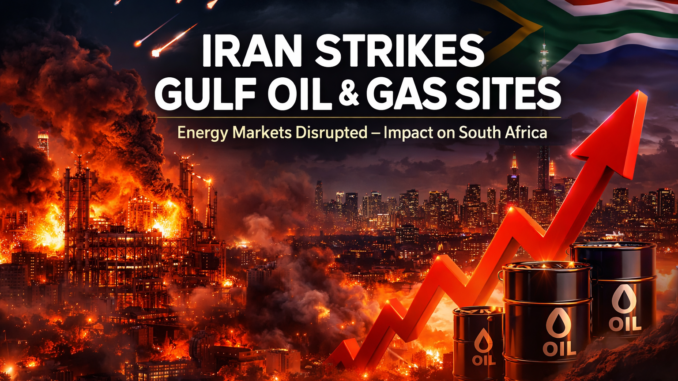


As tensions escalate in the Middle East, the economic repercussions are extending far beyond the region. In particular, the ongoing conflict involving the United States, Israel, and Iran has triggered significant disruptions in global energy markets.
For South Africa, the impact could be substantial. Government officials and analysts are warning that rising oil and gas prices, driven by supply disruptions in the Gulf, may place additional strain on the country’s already fragile economy.
In an expert analysis, political analyst Sanusha Naidu highlights the broader implications of the conflict, noting that the economic consequences are not limited to South Africa but are being felt across the African continent. Key concerns include rising fuel costs, inflationary pressure, and increased cost of living.
Zimbabwe: Political Tensions Escalate Amid Reform Debate
Meanwhile, in Zimbabwe, political tensions continue to intensify. Opposition groups are actively resisting a proposed constitutional amendment that would extend the tenure of President Emmerson Mnangagwa.
Despite facing violence and intimidation, activists remain vocal in their opposition. Among them is law professor Lovemore Madhuku, who was seriously injured in an attack in early March—an incident he attributes to security agents allegedly linked to the state.
New Tax Policy Disrupts Poultry Sector
In Côte d’Ivoire, the agricultural sector is facing fresh challenges. Just as the country was approaching self-sufficiency in poultry production, recent tax policy changes have created significant disruption.
The removal of the value-added tax (VAT) exemption on agricultural inputs and animal feed—initially set at 18% and later reduced to 9%—has increased operational costs for farmers.
This policy shift now threatens:
- Farm profitability
- Employment across the poultry value chain
- The stability of locally produced chicken supply
As tensions escalate in the Middle East, the economic repercussions are extending far beyond the region. In particular, the ongoing conflict involving the United States, Israel, and Iran has triggered significant disruptions in global energy markets.
For South Africa, the impact could be substantial. Government officials and analysts are warning that rising oil and gas prices, driven by supply disruptions in the Gulf, may place additional strain on the country’s already fragile economy.
In an expert analysis, political analyst Sanusha Naidu highlights the broader implications of the conflict, noting that the economic consequences are not limited to South Africa but are being felt across the African continent. Key concerns include rising fuel costs, inflationary pressure, and increased cost of living.
Zimbabwe: Political Tensions Escalate Amid Reform Debate
Meanwhile, in Zimbabwe, political tensions continue to intensify. Opposition groups are actively resisting a proposed constitutional amendment that would extend the tenure of President Emmerson Mnangagwa.
Despite facing violence and intimidation, activists remain vocal in their opposition. Among them is law professor Lovemore Madhuku, who was seriously injured in an attack in early March—an incident he attributes to security agents allegedly linked to the state.
New Tax Policy Disrupts Poultry Sector
In Côte d’Ivoire, the agricultural sector is facing fresh challenges. Just as the country was approaching self-sufficiency in poultry production, recent tax policy changes have created significant disruption.
The removal of the value-added tax (VAT) exemption on agricultural inputs and animal feed—initially set at 18% and later reduced to 9%—has increased operational costs for farmers.
This policy shift now threatens:
- Farm profitability
- Employment across the poultry value chain
- The stability of locally produced chicken supply
Conclusion
From energy market disruptions caused by geopolitical conflict to domestic policy challenges and political instability, several African nations are currently navigating complex economic and political pressures. For South Africa and the broader continent, these developments signal a period of heightened uncertainty and economic strain.
From energy market disruptions caused by geopolitical conflict to domestic policy challenges and political instability, several African nations are currently navigating complex economic and political pressures. For South Africa and the broader continent, these developments signal a period of heightened uncertainty and economic strain.
Leave a Reply