
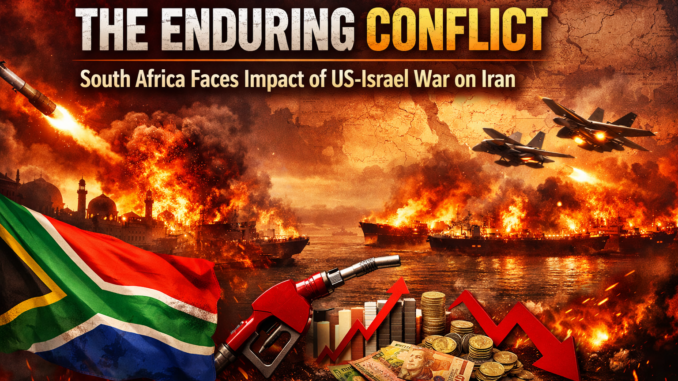


When the United States and Israel launched strikes against Iran—reportedly targeting key leadership figures including Supreme Leader Ali Khamenei—many analysts initially believed Tehran would be swiftly overpowered, potentially paving the way for regime change. However, weeks into the conflict, that assumption has proven premature.
Now entering its fourth week, the war shows no clear signs of de-escalation. This raises a critical question: has the administration of Donald Trump once again underestimated the resilience and strategic capacity of its adversary, as seen in past US military engagements?
Rising Regional Tensions and Global Economic Risks
Iran’s response has extended beyond its borders, targeting nations such as Saudi Arabia, Qatar, Kuwait, Bahrain, Iraq, and the United Arab Emirates—largely due to their hosting of US military bases. Meanwhile, Israel has intensified operations in Lebanon, where Iran-backed Hezbollah operates.
As the conflict spreads, global trade—especially oil supply—faces significant disruption. The potential closure of the Strait of Hormuz, a critical route for nearly 20% of the world’s oil, poses a severe threat to the global economy. In response, Trump has reportedly sought assistance from NATO to secure the passage.
Compounding the crisis, both sides have begun targeting oil infrastructure and tankers, further destabilizing energy markets.
Impact on South Africa’s Economy
For South Africa, the economic consequences are deeply concerning. Rising oil prices are driving up the cost of living, placing additional strain on citizens already facing financial hardship. Nearly half the population depends on social grants, while the economy is still recovering from the effects of the COVID-19 pandemic and the destructive 2021 riots.
South Africa’s Foreign Policy Challenges
The South African government continues to monitor developments closely. Recently, it hosted the multinational naval exercise “WILL FOR PEACE 2026,” involving BRICS+ nations such as Russia, China, and controversially, Iran. Notably absent were India and Brazil.
Domestically, political parties differ on who is responsible for the conflict, but there is broad consensus that its economic impact will be negative. Fuel price hikes and inflation are expected to intensify existing socio-economic challenges.
Strained Relations with the US and Israel
South Africa’s relationship with both the US and Israel has long been complicated, largely shaped by historical tensions dating back to the apartheid era. The ruling African National Congress (ANC) has often been critical of Western nations for their perceived support of apartheid.
This tension can be traced back to the 1980s, when US President Ronald Reagan adopted a policy of “constructive engagement” with the apartheid regime, opposing sanctions—a stance strongly criticized by the ANC.
Following his release in 1990, Nelson Mandela openly praised leaders like Yasser Arafat, Muammar Gaddafi, and Fidel Castro for supporting South Africa’s liberation struggle. At the same time, he criticized Western nations for their lack of support, setting the tone for future diplomatic relations.
Economic Dependence vs Political Positioning
Despite political differences, South Africa remains economically tied to the West. Its major trading partners include the European Union, the US, and Canada. Western multinational corporations play a significant role in employment, and a large portion of international tourists also come from these regions.
This creates a contradiction: while South Africa adopts a critical stance toward Western powers, its economy remains heavily dependent on them.
Escalating Diplomatic Tensions
Relations have deteriorated further following South Africa’s decision to take Israel to the International Court of Justice (ICJ) over genocide allegations. In response, the Trump administration expelled South Africa’s ambassador, Ebrahim Rasool. More recently, South Africa declared Israel’s ambassador persona non grata, deepening diplomatic tensions.
Neutrality Under Question
Although South Africa has expressed willingness to mediate in the conflict, its perceived bias may undermine its credibility as a neutral party. Historically, the country has promoted non-alignment and multilateralism, but recent actions suggest inconsistency.
Within the Government of National Unity (GNU), divisions are evident. Parties such as the Democratic Alliance, Freedom Front Plus, and Inkatha Freedom Party tend to favor pro-Western positions and have opposed the ANC’s stance on Israel.
Conclusion: A Policy at Crossroads
South Africa’s foreign policy appears increasingly inconsistent—advocating neutrality in conflicts like Russia-Ukraine while taking clear positions elsewhere. This lack of coherence risks undermining both its global credibility and economic stability.
At the same time, there is growing perception that foreign policy is being used to divert attention from domestic challenges—mirroring pressures faced by leaders like Donald Trump in the US.
Leave a Reply